
A new episode of the New Books in Poetry podcast is up. I had a riveting conversation with Roy G. Guzmán about their new book Catrachos (Graywolf Press).
Guzmán’s Catrachos is a stunning debut collection of poetry that immerses the reader in rich, vibrant language. Described as being “part immigration narrative, part elegy, and part queer coming-of-age story,†this powerful collection blends pop culture, humor, with Guzmán’s cultural experience to explore life, death, and borders both real and imaginary.
“This isn’t supposed to be a history book, and yet it is,†says Guzmán in discussing Catrachos, explaining that the book is not supposed to be anthropology, sociology, or a testimonial either, and yet it is. “Those are the contradictions, especially when you’re a marginalized writer, your words are always operating on so many different frequencies at once.â€
Here’s a sample of Guzmán’s writing from the book:
“It is not a fallacy that the pulperÃa owner who wakes up
dressed in a tunic of warriors’ pelos, or the milkman
pressing his rough hands against the cow’s tectonic body,
remembers the skirted boy with an ovarian lipstick for a tongue,
the boy who offered a tenth of his knees to the teeth
of a country with dentures.â€
— from “Finding Logic in a Crushed Headâ€
You can listen to the interview here or on the podcast app of your choice.
Newsletter | Twitter | Instagram
 I read two fantastic poetry books this month. The first wasÂ
I read two fantastic poetry books this month. The first was  What should be no surprise to anyone who reads my blog at this point is that I love Junji Ito — a writer and artist who continues to prove himself a master of the horror genre with his graphic novel, No Longer Human. The story follows the life of a man who feels disconnected with humanity to the extent that he finds it incredibly anxiety inducing — and at times outright horrifying — to interact with other people My full review is
  After watching Hellier, I’ve taken an interest in the idea of synchronicity (or meaningful coincidences), which is often discussed on the show. Carl Jungthe concept in his paper, Synchronicity: An Acausal Connection. The paper presents his theories on synchronicity, which he ties to psychology, psychic phenomena, quantum mechanics, and and the collective unconscious. For Jung, synchronicity was a defining principle of nature as valid as space, time, and causality. It makes for a fascinating read, even if some of the technical aspects of the paper were a bit hard to follow. I found it so interesting that I put together a
  Neil Gaiman’s The Sandman is one of my all-time favorite comic book series. When I learned that the characters would live on through stories told by different authors, I was both excited and wary. However, with Nalo Hopkinson (who is known for putting a Carribean spin on fantasy and horror), I knew the story would be in good hands. Her take, The House of Whispers is phenomenal, with gorgeous illustrations by DOMO.
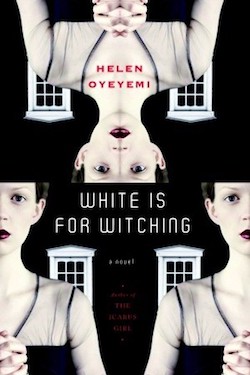 Helen Oyeyemi’s White is for Witching is the story of the Silver family and their house in Dover, England, which has converted to a bed-and-breakfast. The house, however, has a will of its own — and though it loves the women of the family, it has a malice for strangers.
 Another great (though very different) read this month was Sealed by Naomi Booth. Set in rural Australia, Sealed is a psychological body horror novel. Much of the tension is driven by the anxieties of the main character Alice, who is heavily pregnant and her fears about rumors of a bizarre disease that seals people within their own skins. When her obsession with the disease nearly threatens her government job, Alice and her boyfriend Pete (who I find annoying) travel to the countryside in search of solitude and safety. But Alice still sees signs of the disease all around her and she increasingly questions whether they made the right decision.